
As temperatures rise during the summer months, working in hot weather can present significant challenges for employees across many industries. Whether you work outdoors, travel between sites, spend time driving, or work in a warm indoor environment, exposure to heat can affect your health, safety, and overall wellbeing.
When the body becomes too hot, it has to work harder to regulate its temperature. This can lead to dehydration, fatigue, headaches, reduced concentration, and a greater risk of mistakes or accidents. In more serious cases, prolonged exposure to heat can result in heat exhaustion or heatstroke, both of which can have significant health consequences if not addressed promptly.
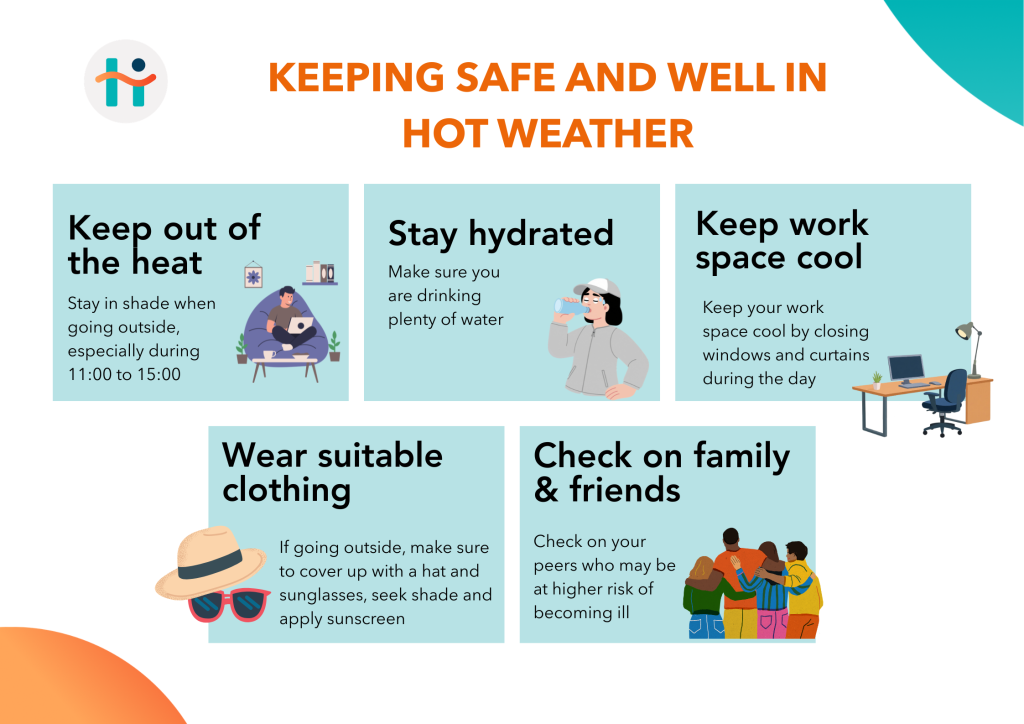
One of the simplest and most effective ways to stay safe during hot weather is to remain well hydrated. Drinking water regularly throughout the day helps the body regulate temperature and replace fluids lost through sweating. Waiting until you feel thirsty is not always the best approach, as thirst can be an early sign of dehydration. Keeping a water bottle nearby and taking regular drinks can make a significant difference, particularly for those carrying out physical tasks or spending extended periods outdoors.
Clothing can also play an important role in managing heat exposure. Lightweight, loose-fitting, and breathable fabrics can help the body stay cooler, while light-coloured clothing reflects more sunlight than darker colours. For those working outside, sunscreen, hats, and sunglasses can provide valuable protection from the sun’s harmful rays, even on overcast days.
Taking regular breaks is equally important. Where possible, employees should use shaded, well-ventilated, or air-conditioned areas to cool down and recover. Planning physically demanding tasks for cooler parts of the day can help reduce the strain that heat places on the body and lower the risk of heat-related illness.
Recognising the signs that your body may be struggling with the heat is essential. Symptoms such as excessive sweating, dizziness, headaches, nausea, muscle cramps, unusual tiredness, or feeling faint should not be ignored. These can be early indicators of heat exhaustion and may worsen if appropriate action is not taken. In severe cases, symptoms such as confusion, loss of consciousness, or a very high body temperature may indicate heatstroke, which requires immediate medical attention.
Hot weather can affect more than just physical health. Many people find that high temperatures impact their concentration, patience, sleep quality, and mood. Feeling uncomfortable, tired, or irritable during a heatwave is common and can make everyday work tasks feel more demanding. Looking after your wellbeing by staying hydrated, taking breaks, and getting adequate rest can help minimise these effects and support both physical and mental performance.
Employers also have an important role to play in protecting staff during periods of hot weather. Providing access to drinking water, encouraging regular breaks, ensuring adequate ventilation, and communicating heat-related safety guidance can all contribute to a safer working environment. Employees should feel confident raising concerns if they believe excessive heat is affecting their ability to work safely.
While warm weather can be enjoyable, it is important not to underestimate the impact that heat can have on health and wellbeing. By taking sensible precautions, staying alert to the signs of heat-related illness, and supporting one another in the workplace, we can all help create safer and healthier working environments throughout the summer months.